The GST Council is set to discuss the application of GST on merchant fees for UPI transactions exceeding Rs 2,000. This comes as a new Merchant Discount Rate (MDR) of 0.4% (capped at Rs 300) is effective from October 15 for such transactions, which, as a service, would typically attract an 18% GST levy. The Council's decision is anticipated to consider consumer interests, with merchants potentially able to claim Input Tax Credit.

The GST Council has approved significant reforms including removing the arrest power of tax officials, raising the prosecution threshold fivefold to Rs 5 crore, and introducing faster, largely automated refunds for taxpayers. These changes, aimed at fostering trust and easing business, will be implemented from April 1, 2027.

The Goods and Services Tax (GST) Council is set to discuss proposals aimed at transforming the complex indirect tax system into a more business-friendly regime, focusing on simplifying compliance, reducing administrative burdens, and potentially raising the prosecution threshold.

Industry is pushing for GST reforms that would let companies use unused tax credits from one state to pay GST liabilities in another, potentially freeing up working capital trapped across state registrations.

The GST Council, chaired by Finance Minister Nirmala Sitharaman, has begun deliberations on significant reforms, including decriminalising nine offences, softening provisions for 24, and raising the threshold for criminal prosecution to Rs 5 crore. The proposed changes also include scrapping the arrest powers of GST officers and introducing an 'invoice matching system' to combat fake input tax credit claims, aiming for a trust-based taxation approach and enhanced ease of doing business.

Finance Minister Nirmala Sitharaman announced that the Goods and Services Tax (GST) Council's October 7 meeting will focus on 'GST 2.0' process reforms, including e-invoicing and input tax credit rules, while also addressing complex issues surrounding the taxation of the digital economy and cryptocurrency.

The GST Council has approved a proposal allowing pharmaceutical companies to claim Input Tax Credit (ITC) on free samples and goods destroyed or written off due to expiry, effective from the next fiscal year. This move aims to support manufacturing, liquidity, and exports within the sector.

India's GST Council has approved changes allowing small online sellers to register in states without physical premises by using an e-commerce operator's warehouse as their principal place of business, aiming to boost national sales for small businesses.

The GST Council is set to consider a proposal allowing businesses to file for GST registration in multiple states via a single application and standardise the documents required by tax officers, aiming to enhance ease of doing business.

The Goods and Services Tax (GST) Council has announced that Input Tax Credit (ITC) will now be available on health and life insurance policies provided by employers to their employees, a move expected to significantly reduce costs for businesses, especially MSMEs.

India's Next-Gen GST reforms are proving instrumental in driving robust economic growth, simplifying tax compliance, and fostering a more inclusive business environment across the nation, aligning with the vision of a 'Viksit Bharat', writes Finance Minister Nirmala Sitharaman.

75% of India's 60 million digital-payment merchants have never recorded a transaction above 2,000.
As India marks a decade of the Goods and Services Tax (GST), the focus is shifting towards enhancing efficiency through artificial intelligence, data sharing, and process simplification. The reform, which unified India's indirect tax system, has significantly broadened the tax base and boosted revenues, with future plans including a streamlined two-tier rate structure and continued technological integration to reduce compliance costs and combat evasion.

The GST will be a national sales tax that will be levied on consumption of goods or use of services

Any reduction on purifiers would need consensus among state finance ministers.

The Finance Ministry has clarified that the 0.4 per cent Merchant Discount Rate (MDR) on UPI transactions above Rs 2,000, effective October 15, is not expected to increase cash transactions or cause inflation. The ministry also dismissed allegations of US pressure influencing the decision, asserting that the policy aims to promote RuPay credit cards within the UPI ecosystem, and a monitoring mechanism will ensure the MDR burden is not passed on to consumers.

The Indian government has approved the introduction of one billion polymer banknotes in Rs 10 and Rs 20 denominations for field trials, aiming to enhance durability. This move comes as the Finance Minister also addressed Parliament on declining retail inflation, GST reforms, and other fiscal measures taken to support the economy and household consumption.

Central Delhi has undergone a significant beautification drive, including extensive lighting, floral displays, and BRICS-themed signages, in preparation for the upcoming BRICS Leaders' Summit. The New Delhi Municipal Council (NDMC) and other civic bodies have focused on sprucing up key routes, hotels, and the summit venue, Bharat Mandapam, to welcome delegates and visitors.

The Delhi High Court has directed the GST Council to consider lowering or abolishing the goods and services tax on air purifiers, citing worsening air quality in the national capital. The court has asked the council to meet at the earliest, even via video conference if necessary, to address the issue.
India's gross GST collections increased by 3.2 per cent to over Rs 1.94 lakh crore in May, driven by improved supplies of goods and services and a continued expansion in collections from imports.

The GST Council at its next meeting may consider a reduction in taxes on air and water purifiers as air quality across the country worsens and access to safe drinking water remains uneven.
Businesses may eventually have to file returns largely based on invoices uploaded by suppliers, with limited scope for manual changes.

Economic think-tank NCAER has said that service tax will go up by one per cent per annum in the next four years, following the government's decision to introduce goods and services tax from April 1, 2010.

Room for rise of up to 2 percentage points, move to help meet higher expenditure need in FY17

Non-resident Indians (NRIs) in the Gulf region are increasingly purchasing term life insurance policies from India, driven by geopolitical uncertainties in West Asia and the significant cost advantages offered by Indian products, with the GCC region now contributing over half of the total NRI demand.

'There has to be a safe harbour for licensed entities, which have followed all the norms prescribed by the RBI.'

'Rates go up, revenues go up, and the need for compensation diminishes.'

'It is not because of the war in West Asia, which began on February 28.' 'Petroleum product prices are already going through the roof. They are bound to have a serious inflationary impact.' 'A country's leadership is tested in trying times. It is here that the current leadership is failing.'

The GST Council, in its meeting on Saturday, is likely to decide on reducing tax rates on life and health insurance premiums, while hiking it on high-end wrist watches, shoes and apparels, besides considering a separate 35 per cent tax slab for sin goods. The 55th meeting of the GST Council, chaired by Union Finance Minister Nirmala Sitharaman and comprising state counterparts, is likely to discuss rate rejig in about 148 items, besides, it will also deliberate on bringing Aviation Turbine Fuel (ATF), a major component for airline industry's operation cost, in the Goods and Services Tax (GST) fold.

After the last Budget's announcement of a major tax relief for those earning an annual salary of less than Rs 12 lakh, there is not much that individuals can look forward to in the forthcoming Budget, points out A K Bhattacharya.
The central government has proposed just two tax rates of 5 per cent and 18 per cent in the revamped Goods and Services Tax (GST), slated to replace the current indirect tax regime by Diwali this year, highly placed sources said.
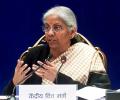
The GST Council on Saturday postponed a decision on cutting tax rate on life and health insurance premiums, officials said. The 55th meeting of the GST Council, chaired by Union Finance Minister Nirmala Sitharaman and comprising state counterparts, decided that some more technicalities needed to be ironed out and tasked the GoM for further deliberations.

The GST Council on Wednesday approved a two-tier rate structure of 5 and 18 per cent, which will be implemented from September 22.

Leading Indian jewellery bodies, including the All India Gem & Jewellery Domestic Council (GJC) and Malabar Gold & Diamonds, have expressed support for Prime Minister Narendra Modi's appeal to reduce gold imports and are advocating for enhancements to the Gold Monetisation Scheme (GMS) to unlock India's vast idle gold reserves.

GST Reform 2.0, which trims tax slabs from four to two, signals a push for demand-led growth, and together with recent income tax cuts, sets the stage for sustained economic growth, experts said. The Goods and Services Tax (GST) Council on September 3 approved an overhaul of the indirect tax regime by taxing essentials at 5 per cent and other goods at 18 per cent. A new 40 per cent tax will be applicable on luxury and sin items.

The conflict may disrupt Budget 2026-2027 projections, squeezing revenues and raising subsidies, prompting fiscal adjustments and potential reforms, echoing lessons from the Covid-era shock, points out A K Bhattacharya.

The proposed 'Next Gen GST' with sweeping reforms, lower tax rates, and just two slabs, aims to boost the economy amid tariff threats and set the stage for a single tax rate regime by the time India becomes a developed nation, government sources said.
The GST Council on Saturday clarified that guarantees provided by corporate to their subsidiaries will attract an 18 per cent GST, while no tax will be levied if a personal guarantee is given by a director to the company. The council, chaired by Union Finance Minister Nirmala Sitharaman and comprising state ministers, also cut the GST rate on molasses to 5 per cent from 28 per cent. It also ceded the right to tax Extra Neutral Alcohol (raw product for making alcohol for human consumption) to the states.

Through his commitment to democratic norms, debate, dissent and constitutionalism, Jawaharlal Nehru helped ensure that parliamentary democracy took deep root in independent India. Utkarsh Mishra evaluates Nehru's 17 years as India's first prime minister, examining his role in nation-building, democratic institution-building, economic planning, scientific advancement and foreign policy.

The Delhi High Court has asked the central government why it cannot reduce the GST on air purifiers, considering the poor air quality in Delhi. The court's concern is that the current 18% GST makes air purifiers unaffordable for the common man.
